

Selections from the funniest and saddest songs of the times…
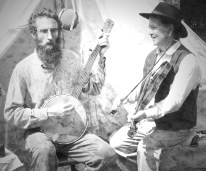 PROGRAM DESCRIPTION:
The Hardtacks present a diverse mix of songs, tunes, speeches, poetry, prose, and visual arts, exploring the heights of pathos and depths of humor in Civil War folk and popular music. Driven by the engaging music, period instruments, projected images, and audience participation throughout, this Lyceum-style performance brings 19th century United States cultures and perspectives to vivid life and challenges the audience to make new connections between the primary sources they encounter. From the theatrical class-, gender-, and race-bending comedies of the antebellum minstrel stage to the rowdy parodies composed by anonymous soldiers in every camp, from the abolitionist sympathies of early anti-slavery blackface songs to the morose wartime parlor ballads contemplating sacrifices of the war effort, this program demonstrates how laughter and tears often work side by side to inform, inspire, offend, honor, and invoke the “big issues” of the era.
PROGRAM OPTIONS:
- Antebellum Focus = ~45 minutes
- Wartime Focus = ~45 minutes
- Antebellum + Wartime Sets = ~90 minutes, with intermission
[ BOOK A SHOW through our CONTACT PAGE >> ]
Sample songs:
 Star-Spangled Banner (Key, 1814) - What's the connection between the US National Anthem, militant slave uprisings, and the burning of the White House?
  Harvard: “American Minstrel Show Collection” (1823-1947) - Click to view collection guide from Harvard.edu: American minstrel show collection, 1823-1947 >> Master Diamond playbills >> T. D. Rice in character >> SCOPE & CONTENT: “The collection includes images of minstrel performers and troupes, playbills and programs of performances, and other miscellaneous materials concerning minstrel shows. The images are of individual minstrel performers and...
  Home, Sweet Home (Bishop & Payne, 1823) - John Howard Payne's lyrics, from the 1823 opera, "Clari, Maid of Milan", described as "a jewel, cut and set with perfect art":
 Jim Crow (Rice, 1830) - If we can hold our immediate revulsion at the (now offensive) language, we'll find some shocking critique and surprisingly liberal views in the lyrics...
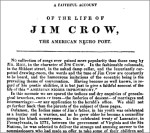 Hodgson: Jim Crow’s Vagaries (1830s?) - In which we discovered such international gems as "Jim Crow's Trip to France" & sundry others...
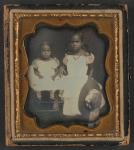 Library of Congress: “Daguerreotypes” Collection (1839-1864) - A captivating look at the people, clothing, & styles of the antebellum & Civil War eras...
 Mary Blane (1840s) - The lost-love minstrel tune “Mary Blane” was one of the most popular songs of the early minstrel era (see Mahar’s list):
 Lucy Neal (J. P. Carter, 1844) - A relentless love song & bitter critique of slavery:
 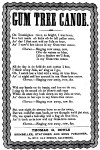 Gum Tree Canoe (1847?) - A peculiar plantation fantasy of love & liberation...
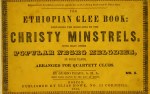 Chaff: The Ethiopian Glee Book (1848-9) - Collects four-part settings of popular songs from the antebellum minstrel stage...
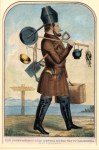 Ho! for California! (Hutchinson, 1849) - "Composed for a group of overland emigrants, who left Massachusetts, in the spring of 1849."
  Angelina Baker (Foster, 1850) - Stephen C. Foster ~ Letter to E. P. Christy (May 25, 1852) ~ "As I once intimated to you, I had the intention of omitting my name* on my Ethiopian songs, owing to the prejudice against them by some, which might injure my reputation as a writer of another style of music..."
 I’m Off for California (1850s?) - Here’s a song you’ll recognize, and yet… it’s a side of the Gold Rush story you might not have heard about in school: The melody is Stephen Foster‘s first big hit, “Oh Susannah” (1847), ubiquitous in its time and still common in the “folk song” tradition over a century and a half later. Foster’s original composition features two world-changing technologies...
  Library of Congress: “America Singing: 19th Century Song Sheets” - "For most of the nineteenth century, before the advent of phonograph and radio technologies, Americans learned the latest songs from printed song sheets...."
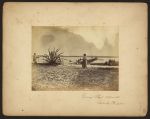 Swing Low, Sweet Chariot (Willis, 1850s?) - Wallis Willis created the song "Swing Low Sweet Chariot" sometime before 1862; we like to pair it with this 1862 photograph by Concord, NH's own H.P Moore.
 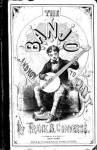 Hamilton College: “Banjo Instruction Manuals” Collection - Includes instructors by Howe (a.k.a. Chaff) (1851),Converse (1867), Buckley (1868), & many more...
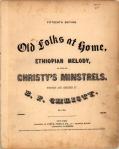 Old Folks At Home (Foster, 1851) - Stephen Foster's 1851 song "Old Folks At Home" provides an excellent introduction to the antebellum period:
  Howe: Instructor for the Guitar (1851) - "Containing NEW AND COMPLETE INSTRUCTIONS. To Which is Added A SELECTION OF CELEBRATED WALTZES, POLKAS, &c. TOGETHER WITH A LARGE COLLECTION OF POPULAR SONGS."
 Hutchinson: “Book of Words” (1851) - Greatest hits from the first decade of their career...
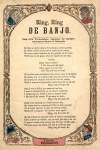 Ring, Ring De Banjo (Foster, 1851) - Frederick Douglass (1845) ~ “Slaves sing most when they are most unhappy. The songs of the slave represent the sorrows of his heart; and he is relieved by them, only as an aching heart is relieved by its tears..."
 “They follow the American race” ~ Banjo Songs in the Gold Rush - How antebellum minstrel music served a growing continental empire...
 Uncle Tom’s Cabin (1852-1859?) - "Euclid... is no child for effecting social revolutions, but an impassioned song may set a world in conflagration." ~ The London Times (3 September 1852)
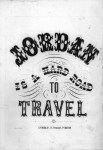 Jordan is a Hard Road to Travel (Emmett, 1853) - Here are a few versions of Dan Emmett's song, displaying the far-reaching sense of international politics and breaking-news commentary to be found on the antebellum popular stage...
 My Old Kentucky Home (Foster, 1853) - Stephen Foster's anthem recounts "Uncle Tom's Cabin" in three verses.
 Briggs: Banjo Instructor (1855) - "Containing the elementary principles of music, together with examples and lessons, ... to which is added a choice collection of pieces, numbering over fifty popular dances, polkas, melodies, &c. &c., many of which have never before been published. Composed and arranged expressly for this work."
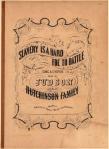 Slavery is a Hard Foe to Battle (Hutchinson Family, 1855) - ...updates Dan Emmett's "Jordan is a Hard Road to Travel" for an abolitionist audience.
 Walk in the Parlor (1850s) - Note especially the connections delineated between slavery, land, and knowledge...
 Nelly Gray (Hanby, 1856) - Benjamin Hanby wrote Nelly Gray in 1856, in response to a fugitive slave case ...
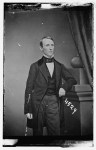 I’m Off for Nicaragua (Rice, 1858) - Phil Rice gives us this striking vision of slavery carried south in the service of the Filibuster president, General William Walker:
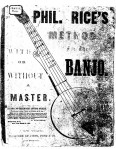 Rice: Correct Method for the Banjo… (1858) - with or without a master. / CONTAINING THE MOST POPULAR, Banjo Solos, Duets, Trios and Songs, / performed by the Buckley's, Christy's, Bryant's, Campbell's, White's / And other Celebrated Bands of Minstrels of which the Author was a member.
 Picayune Butler’s Come to Town (Rice, 1858) - "And when he made his appearance you should have heard the reception he got. I thought the roof would fall off...": Picayune Butler takes New York & Tokyo by storm.
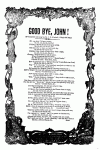 United States it am de place (Rice, 1858) - This mysterious half-dialect minstrel song from Rice's 1858 Method for the Banjo offers an intriguing glimpse into the economics and racial politics of the antebellum era...
 Uncle Sam’s Farm: “One grand, ocean-bound republic” - Stephen A. Douglas (1858): "This Union will not only live forever, but it will extend and expand until it covers the whole continent, and makes this confederacy one grand, ocean-bound Republic..."
 Here I Am as You Diskiver (1860) - Blackface minstrel tune conflating plantation slavery, the "Indian Nation" (& associated issues of Removal), & antebellum militarism in public space:
 Hutchinson: “Republican Songster” (1860) - Shows how activist performers used music to advance their anti-slavery agenda during a tumultuous political season ...
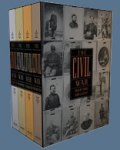 Library of America: The Civil War Told by Those Who Lived It - Library of America: The Civil War Told by Those Who Lived It “Hundreds of selections from scores of eyewitnesses, both North and South, in the heat of battle and at the home front, from November 1860 to June 1865.”
 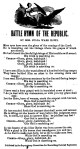 Battle Hymn of the Republic (Howe, 1861) - Written in November 1861 by abolitionist poet Julia Ward Howe, this song seems to glimpse the fiery trial ahead:
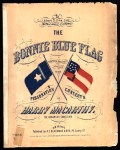 Bonnie Blue Flag (Macarthy, 1861) - Harry Macarthy's lively jig documents the secession of the southern states in winter 1860-1861...
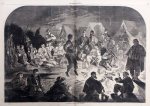 Homer: “A Bivouac Fire on the Potomac” (1861) - Harper’s Weekly of December 21, 1861 features Winslow Homer’s “A Bivouac Fire on the Potomac”: Homer depicts an encounter between diverse American cultures, centered on the evening’s entertainments of dance, fiddle, and other camp pastimes… FOR BACKGROUND, SEE:
 John Brown’s Original Marching Song (1861) - So is this song about THE John Brown (abolitionist & domestic terrorist), or a more obscure John Brown (enlisted in the 12th MA)... ?
 Maryland, My Maryland (Randall, 1861) - "She meets her sisters on the plain-
'SIC SEMPER!' 'tis the proud refrain..."
Maryland, My Maryland (Randall, 1861) - "She meets her sisters on the plain-
'SIC SEMPER!' 'tis the proud refrain..." Picket Guard (Beers & Hewitt, 1861) - "His musket falls slack, his face dark and grim,
Grows gentle with memories tender,
As he mutters a prayer for the children asleep--
For their mother--may Heaven defend her."
Picket Guard (Beers & Hewitt, 1861) - "His musket falls slack, his face dark and grim,
Grows gentle with memories tender,
As he mutters a prayer for the children asleep--
For their mother--may Heaven defend her."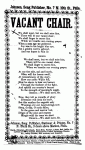 Vacant Chair (Root & Washburn, 1861) - George Root's setting of Henry S. Washburn's popular poem ...
 Wake Forest University: “Confederate Broadsides” Collection - A colorful collection of Southern propaganda...
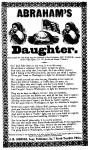 Abraham’s Daughter (Winner, 1861) - "One Country and one Flag, I say, whoe'er the war may slaughter..."
 Dixie’s Land No. 5 (“Come, patriots all who hate oppression…”) - This LOC.gov songsheet shows us how Union partisans re-purposed Emmett’s 1859 minstrel walkaround: The opening lines establish reasons for
 Battle Cry of Freedom (Root, 1862) - "And at the fourth verse a thousand voices were joining in the chorus..."
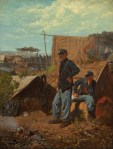 Home, Sweet Home: “Had we not had the river between us” - One private's account of the power & presence of music after a terrible battle:
 Kingdom Coming (Work, 1862) - Popular in both the North and the South, perhaps because of his ambiguous treatment of the plight of "contraband" (liberated slaves) ...
  Richmond a Hard Road to Travel (1862) - An annotated look at an epic parody...
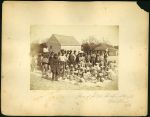 Freedmen’s Christmas Shout (South Carolina, 1863) - "At last they cleared the room and began, and a strange sight it was..."
 Babylon is Fallen (Work, 1863) - After the Emancipation Proclamation changed the face of the Civil War, Henry Clay Work released this sequel to his popular "Kingdom Coming":
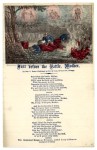 Just Before the Battle, Mother (Root, 1863) - "At my request they sat down and sang, and when about half through, as I stepped to the door, a shell exploded within fifty yards..."
 Kingdom Coming: “It was a proud moment for Robert” (1863) - Esther Hill Hawks ~ Diary (February 1863) ~ "It was a proud moment for Robert when he placed a guard of colored soldiers around the house of his former owner..."
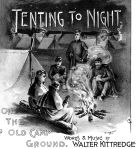 Tenting on the Old Camp Ground (Kittredge, 1863) - "He thought of the many dear boys already gone over to the unseen shore ..."
 Nast: “The Drummer Boy of Our Regiment” (1863) - Published in Harper's Weekly, December 19, 1863.
 Southern Girl with the Homespun Dress - "Many a woman who never before held a plow, is now seen in the corn-field..."
 Tenting on the Old Camp-Ground (Parody) - "We're drinking tonight in the old bar-room,
Give us a glass to cheer..."
Tenting on the Old Camp-Ground (Parody) - "We're drinking tonight in the old bar-room,
Give us a glass to cheer..."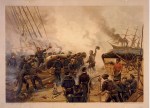 Roll, Alabama, Roll (1864) - Recounting the final battle of the most famous Confederate privateer...
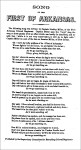 Song of the 1st of Arkansas (1864) - This rewrite of "Battle-Hymn of the Republic" puts the agency of social and economic upheaval squarely on the shoulders -- or rather, under the boot-heels -- of Colored Troops.
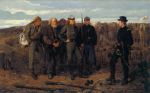 Battle Cry of Freedom: “If we’d had your songs…” - Account given by anonymous captured Confederate officer...
 Come up from the fields, father (Walt Whitman, 1865) - Come up from the fields, father (Walt Whitman, Leaves of Grass: Drum Taps, 1865)
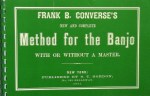 Converse: New and Complete Method for the Banjo, With or Without a Master (A.K.A. “Green”) (1865) - This instructive tutor by the "Father of the Banjo" bears a distinctively Irish flavor ...
 Dixie: “One of the best songs I have ever heard…” (1865) - Abraham Lincoln (April 10, 1865): "Our adversaries over the way attempted to appropriate it, but I insisted yesterday that we fairly captured it."
 Jeff in Petticoats (Tucker & Cooper, 1865) - A humorous slather of wordplay and derision aimed at (former) confederate president Jefferson Davis...
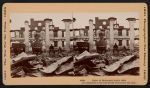 Kingdom Coming: Union Troops Parade in Richmond - "The demonstrations of the colored people on witnessing the review were at times frantic for joy beyond all description..."
 Marching Through Georgia (Work, 1865) - This jaunty march commemorating Sherman's March to the Sea proved to be one of Henry Clay Work's most famous pieces:
  To The Leaven’d Soil They Trod (Whitman) - "To the fiery fields emanative, and the endless vistas beyond—to the south and the north..."
 Allen &c.: Slave Songs of the United States (1867) - "The musical capacity of the negro race has been recognized for so many years that it is hard to explain why no systematic effort has hitherto been made to collect and preserve their melodies..."
 Buckley: Banjo Guide (1868) - "Containing the Elementary Principles of Music, Together with New, Easy, and Progressive Exercises, and a Great Variety of Songs, Dances, and Beautiful Melodies, Many of Them Never Before Published."
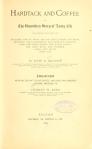 Billings: Hardtack and Coffee (1887) - INCLUDING CHAPTERS ON: ENLISTING, LIFE IN TENTS AND LOG HUTS, JONAHS AND BEATS, OFFENCES AND PUNISHMENTS, RAW RECRUITS, FORAGING, CORPS AND CORPS BADGES, THE WAGON TRAINS, THE ARMY MULE, THE ENGINEER CORPS, THE SIGNAL CORPS, ETC. ...
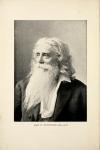 Hutchinson: “The Story of the Hutchinsons (Tribe of Jesse)” (1896) - Invaluable insights into one of the most famous singing families of the Antebellum era.
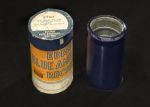 UCSB: Early 20th Century Recordings - UCSB's Edison wax cylinder collection provides a great many early recordings from the 1890s and 1900s, which is as close as modern recorded music gets to the 1860s*.
 Hugill: “Shanties from the Seven Seas” (1961) - "Shipboard Work-Songs and Songs Used as Work-Songs from the Great Days of Sail"
 Attali: “Noise: The Political Economy of Music” (1977) - "Music is prophecy."
 Epstein: “Sinful Tunes and Spirituals” (1978) - Black Folk Music to the Civil War
 Abrahams: Singing the Master (1993) - This carefully researched survey reconstructs the multicontinental roots of antebellum Southern cornshucking rituals:
  Lott: Love & Theft (1993) - “For over two centuries, America has celebrated the very black culture it attempts to control and repress, and nowhere is this phenomenon more apparent than in the strange practice of blackface performance. Born of extreme racial and class conflicts, the blackface minstrel show sometimes served to usefully intensify these conflicts. Based on the appropriation of...
  Cockrell: Demons of Disorder (1997) - by Dale Cockrell ... A riveting analysis of unconventional texts from the first two decades of minstrelsy.
 Emerson: “Doo-Dah!” (1997) - Stephen Foster and the Rise of American Popular Culture
 Mahar: Behind the Burnt Cork Mask (1999) - Mahar's survey of early minstrel materials delineates the complex cultural turbulence of the antebellum era:
 Lhamon: Raising Cain (2000) - Lhamon reconstructs the hidden history of public dance, musical fusion, Jim Crow, and racial identity (& transgression) in antebellum U.S. cities, then traces it forward into the 20th century:
 Flaherty: “Music of the Old South: Polk Miller & the Old South Quartette” (2006) - Collects the recordings and ephemera of the OSQ (1909-1928), in all their shocking and confusing beauty...
 Gac: “Singing for Freedom” (2007) - "The Hutchinson Family Singers and the Nineteenth Century Culture of Antebellum Reform"
 Carter: “The Legacy of the African-American Spiritual” (2010) - "They found a secret door to take them into that world where the tears are wiped away..."
 NHH Humanities to Go: “Rally ‘Round the Flag” - Grants for NH community groups.
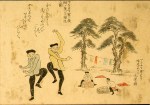 Rouleau: “In the Wake of Jim Crow” (2012) - How did impromptu bands of sailors in blackface become a significant channel of 19th century US cultural diplomacy?
 Civil War Echoes: Paisley’s “Accidental Racist” (2013) - "When I put on that t-shirt, the only thing I meant to say is I'm a Skynyrd fan..."
 Smith: “The Creolization of American Culture” (2013) - "William Sidney Mount and the Roots of Blackface Minstrelsy"
 Jamison: “Hoedowns, Reels, and Frolics” (2015) - "Roots and Branches of Southern Appalachian Dance"
 “Best of NH” 2016 - Editors' Choice Award: "Historical Band"
 Dubois: “The Banjo” (2016) - "The growing of a new gourd in strange lands to replace the broken ones of the old, the crafting of strings to sound out new songs."
- NHH Humanities to Go: “Global Banjar!” - Grants for NH community groups.
 NHSCA: Arts Education Grants - Grants to fund classroom visits, concerts, & residencies at NH schools.
 2016 Stephen C. Foster Award - Bestow'd by The Civil War Roundtable of the Merrimack.
 Brown University: “African American Sheet Music” - "This consists of music by and relating to African Americans, from the 1820s to the present day, and consists of approximately 6,000 items. ..."
 Banjo History Videos - Here are some videos on banjo history, noting especially the early banjo’s roots in Africa and the Caribbean: Akonting Roundtable Segment One: The History and Music of the Akonting
 CD: “Global Banjar” - Delineates the development of diverse national, racial, and class identities in antebellum pop/folk banjo music from various corners of the 19th century globe...
 Hardtacks CD: “Music of the Civil War” - Recorded live with the Sounds of Stow Chorus (17 May 2015)
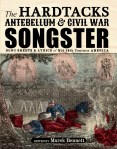 Hardtacks Antebellum & Civil War SONGSTER - An anthology of 100+ midcentury song sheets & lyrics drawn from primary sources...
BANNER IMAGE CREDIT:

 The Hardtacks